Showing posts with label Ebbott. Show all posts

Thursday, 23 April 2026

Article T - 1813 Sale of Hereditaments and Lands Near Launceston

 This post is part of the Blogging from A to Z Challenge (#AtoZChallenge), where I’m exploring historical newspaper clippings—one story at a time—through my series “Behind the Newsprint.”

In January 1813, a small notice in the West Briton offered Westcott for sale as a simple matter of property and profit. But the records surrounding it reveal something quite different: a family negotiating inheritance, income, and identity across generations.

The Clipping

West Briton and Cornwall Advertiser, 29 January 1813, page 1

In January 1813, the West Briton published a notice for the sale of the "fee-simple and inheritance" of several estates, including Lot 3, known as Westcott. The property was described as being located in the parish of Tremayne, consisting of approximately 70 acres, and yielding an annual rent of £65. Prospective buyers were invited to view the land by contacting the tenant, Philip Upton Ebbott, whose lease was scheduled to remain in effect until Lady Day, 1820.

What It Suggests

On the surface, the advertisement presents a typical nineteenth-century land transaction. Philip Upton Ebbott appears as a substantial tenant farmer, managing significant acreage and paying a considerable rent. The sale sought to transfer the underlying ownership of the freehold, the income-producing asset, while the tenant’s occupation remained secure for the remainder of his term.

Looking Closer

The history of the land is clarified by the 1793 will of John Baker, a yeoman of Tremayne.[i] Two decades before the 1813 sale, Baker devised his "estate in Westcott" to his daughter, Wilmot Ebbott, to take effect following the death of his wife, Margery Baker.

The will also reveals a telling financial contrast: Wilmot was required to pay her sister, Mary Joliffe, just £4 per year from the estate. This stands in sharp contrast to the £65 annual rent—more than sixteen times that amount—being paid by the next generation in 1813.[ii]

A headstone in Tremaine Churchyard confirms that this was more than a financial arrangement; it was a home. It records the death of John Ebbott (Wilmot's husband) in 1825, specifically identifying him as being "of Westcutt in this Parish".[iii] His wife, Wilmot (recorded as Wilmet), survived him and lived until 1845, passing away at the age of 91.[iv]

What Lies Behind It

The 1813 advertisement reads less like a commercial transaction and more like a family’s financial strategy.

  • A Family Annuity: While the law recognised a 'tenant' and a 'landlord,' the reality was a likely son providing for his parents. The £65 rent effectively functioned as a family annuity for John and Wilmot Ebbott, allowing them to draw a substantial living from their land while their son, Philip Upton Ebbott, worked it. This income was significantly higher than the £4 annual payment Wilmot was required to pay her sister, Mary Joliffe, under the terms of her father's will.
  • Capitalising the Future: The attempt to sell the "fee-simple and inheritance" in 1813 suggests the family was trying to convert that future rental income into a single lump sum of capital. This move was likely guided by their solicitor, Thomas Pearse, who was already deeply involved in the family's finances, having arranged a £300 mortgage for John Ebbott just two years prior.[v]
  • A Landscape of Names: Even Philip’s name reflects this history; his middle name, "Upton," serves as a living link to Paul Upton Oak, the man from whom his father had consolidated land in the neighbouring parish of Tresmeer.
  • Persistent Ties: Despite mortgages and sale attempts, the family’s identity remained rooted in the land. John Ebbott was still described as “of Westcutt” at his death in 1825, and Wilmot remained in the parish until her death at 91. For the Ebbotts, Westcott was never merely a lot on an auctioneer’s list.

Reflection

While the newspaper clipping presents Westcott as a commodity for sale, the probate and memorial records reveal the enduring human story beneath the ink. The advertisement shows who occupied the land in 1813; the 1793 will explains how they came to be there; and the 1825 headstone demonstrates that their identity remained tied to the soil long after the attempted sale.

Westcott was not just seventy acres of Tremayne; it was a lived and inherited landscape.

Reconstructing Westcott: A Timeline:

  • 7 June 1793: Bequest of Inheritance

John Baker, a yeoman of Tremayne, writes his will in which he bequeaths "all my estate in Westcott" to his daughter, Wilmot Ebbott. The transfer of the estate was to take effect after the death of his wife, Margery Baker. Wilmot was also required to pay her sister, Mary Joliffe, £4 annually from the estate.[vi]

  • 29 January 1813: Advertisement for Public Sale

A notice appears in the West Briton offering the “fee-simple and inheritance” of Westcott (Lot 3) for sale. The property is described as a 70-acre estate in Tremayne with an annual rent of £65. Philip Upton Ebbott is named as tenant.[vii]

  • Lady day (25 March) 1820 – Lease Expiry

The lease held by Philip Upton Ebbott is scheduled to expire.

  • 29 May 1825: Death of John Ebbott,

John Ebbott dies aged 73. His headstone identifies him as “of Westcutt in this Parish,” indicating continued association with the property.[viii]

  • 2 January 1845: Death of Wilmot Ebbott

Wilmot Ebbott, original beneficiary of the 1793 will, dies aged 91 and is buried alongside her husband.[ix][x]

Note on other land records:

Archival records (X920 series) show the family engaged in several transactions between 1788 and 1827—including a £300 mortgage (1811) and a £915 sale (1827). However, these relate to a moiety (half-share) of a tenement in North Tregeare, Tresmeer, rather than the Westcott estate in Tremayne.

Further reads:

For those interested in learning more about Philip Upton Ebbott and his parents John Ebbott & Wilmot Baker, see their profiles on WikiTree.

Sources:


[i] S.D. Reed, Our Cornish heritage: Genealogies of Reed, Rowe, Ebbott and related families, immigrants to Jefferson County, Wisconsin (America, Self published, March 1797), transcription of original will of John Baker proved 29 July 1793, page p.XI-22 (Archdeaconry of Cornwall, Probate Court  AP/B  Wills, Letter B, RefNo AP/B/4743)

[ii] S.D. Reed, Our Cornish heritage: Genealogies of Reed, Rowe, Ebbott and related families, immigrants to Jefferson County, Wisconsin (America, Self published, March 1797), transcription of original will of John Baker proved 29 July 1793, page p.XI-22 (Archdeaconry of Cornwall, Probate Court  AP/B  Wills, Letter B, RefNo AP/B/4743)

[iii] Tremaine Churchyard headstone transcription: John Ebbott (d. 29 May 1825) “TO THE MEMORY OF / JOHN EBBOTT / of Westcutt in this Parish who finished his course May 29, 1825, aged 73 yrs / ALSO, in memory of WILMET, his wife who departed this life / on the 2nd day of January 1845 / AGED 91 YEARS”

[iv] Death Certificate of Wilmot Ebbott, 3 January 1845, General Register office (England), Reference: 1845 M Quarter in LAUNCESTON Volume 09 Page 115

[v] Evidence for Thomas Pearse as solicitor drawn from the 1813 advertisement and A2A archival records (X920 series), including mortgage and land transactions, 1810–1811.

[vi] S.D. Reed, Our Cornish heritage: Genealogies of Reed, Rowe, Ebbott and related families, immigrants to Jefferson County, Wisconsin (America, Self published, March 1797), transcription of original will of John Baker proved 29 July 1793, page p.XI-22 (Archdeaconry of Cornwall, Probate Court  AP/B  Wills, Letter B, RefNo AP/B/4743)

[vii] West Briton and Cornwall Advertiser, 29 January 1813, page 1

[viii] Tremaine Churchyard headstone transcription: John Ebbott (d. 29 May 1825) “TO THE MEMORY OF / JOHN EBBOTT / of Westcutt in this Parish who finished his course May 29, 1825, aged 73 yrs / ALSO, in memory of WILMET, his wife who departed this life / on the 2nd day of January 1845 / AGED 91 YEARS”

[ix] Death Certificate of Wilmot Ebbott, 3 January 1845, General Register office (England), Reference: 1845 M Quarter in LAUNCESTON Volume 09 Page 115

[x] Tremaine Churchyard headstone transcription: John Ebbott (d. 29 May 1825) “TO THE MEMORY OF / JOHN EBBOTT / of Westcutt in this Parish who finished his course May 29, 1825, aged 73 yrs / ALSO, in memory of WILMET, his wife who departed this life / on the 2nd day of January 1845 / AGED 91 YEARS”

Tuesday, 21 April 2026

ARticle R - The Fallacious Fortune: John Ebbott's Journey to India

What a farewell clipping hid — and what four more revealed

This post is part of the Blogging from A to Z Challenge (#AtoZChallenge), where I’m exploring historical newspaper clippings—one story at a time—through my series “Behind the Newsprint.”

The Clipping

“Mr John Ebbott, the well known mining manager, of Chewton… has accepted a lucrative appointment to manage a mine at India, and will leave this district for his new duties on Tuesday afternoon.”[i]

The story starts with a farewell. In September 1891, John Ebbott, a mining manager, borough councillor, and president of the Castlemaine branch of the Australian Miners’ Association,[ii] abruptly left Victoria for a gold venture near Calcutta. A small gathering was held at Sturken’s Hotel, chaired by the mayor. Ebbott was praised for his public service. He left for Adelaide the next day to catch a steamer, while his wife and ten children remained in Chewton.

At face value, this is a colonial success story: a skilled professional rewarded with an overseas post.

What It Suggests

The clipping suggests several straightforward things:

  • Ebbott was respected and successful in Chewton.
  • The Indian offer was a step up — described as lucrative and promising, and extended to him by an external party.
  • His departure, though sudden, was a rational career move.
  • His family would cope; his eldest son, William, was 20, and the community supported him.

But the document also hints at tension. Why leave a stable role as a mining manager, a council seat, and a presidency — with ten children, six under ten — for an uncertain venture on the other side of the world?

Looking Closer

When you bring in other records and later newspaper reports, the farewell narrative begins to crack. Below is a timeline of key events, each anchored to a contemporary source. It reveals how quickly the promise unravelled.

Key dates in John Ebbott's Indian venture

  • 28 September 1891 — Farewell at Sturken's Hotel; Ebbott praised for public service.[iii]
  • 29 September 1891 — Leaves Victoria via Adelaide for India.[iv]
  • 30 September 1891 — Narrowly avoids court summons after witnessing a theft.[v]
  • 2 October 1891 — Officially resigns from Chewton Borough Council.[vi]
  • 14 December 1891 — Daughter Ada Helena, 7, seriously injured at Garfield Mine waterwheel.[vii]
  • 13 February 1893 — His lease at Burns' Reef, Castlemaine, was declared void.[viii]
  • May 1893 — Returns to Castlemaine; suffered jungle fever; Indian goldfield "fallacious".[ix]
  • 25 August 1893 — Prepares to leave for Western Australia to manage goldfields for Bendigo syndicate.[x]

What becomes clear from this timeline:

  • Family risk materialised quickly: Just three months after his departure, his seven-year-old daughter Ada was seriously injured at the very mine Ebbott had managed. His absence meant he was not there.
  • Absence had local costs: His council seat was formally resigned, and within two years his local mining lease was voided. The community moved on.
  • The Indian reality was nothing like the promise: The Mount Alexander Mail (8 May 1893) reported he had been "a sufferer from fever when living in the jungle" and that "the florid account circulated of the rich gold field… proved to be fallacious."
  • Reluctance to return: He had further offers to go back to India but deferred, weighing "remuneration" against "the risk of entering upon what may be an unhealthy climate."
  • A swift pivot: By August 1893 — just three months after returning — Ebbott was already preparing to leave for Western Australia.

What Lies Behind It

John Ebbott’s journey to India was not a simple rise-and-fall story. It was a gamble, one that many colonial families took, but whose failures newspapers rarely highlighted.

I now understand that:

  • The “lucrative appointment” was likely exaggerated for local consumption. Ebbott’s hesitation to return to India, even when offered more work, suggests the reality of the climate, health risks, and returns was far worse than publicly admitted.
  • Migration for work was a family strategy, not abandonment — but in this case, the strategy failed. The reward never materialised, and the costs were real: illness, a child’s serious injury, lost local leases, and a disrupted household.
  • Newspapers reported departures and returns very differently. The 1891 farewell is full of promise and ceremony. The 1893 return is quiet, almost apologetic, buried in a few paragraphs. The shift in tone reveals how colonial journalism often prioritised boosterism and community morale over accuracy.
  • Ebbott was resilient, not defeated. Within months of returning from India, he was already heading to Western Australia. He didn’t stop; he pivoted. The man behind the clipping was a pragmatist, not a victim.

Reflection

This set of clippings — farewell, accident, voided lease, feverish return, and swift departure west — is a powerful reminder that newspapers are not neutral records. They tell us what communities wanted to believe about progress, opportunity, and empire.

The 1891 farewell item celebrates mobility and success. The 1893 return item quietly admits failure. Without that later clipping, we’d never know the full story. That’s the value of the A2Z approach: it resists taking any single source at face value.

Ebbott’s story only emerges when you layer the farewell, the accident, the voided lease, the fever, the reluctant return, and the next departure. Newspapers are excellent at beginnings. Endings — and the messy middle — they often leave for us to find elsewhere.


Further reads:

For those interested in learning more about John Ebbott or his daughter Ada Ebbott, see his profile on WikiTree.

Sources

[i] Untitled Article (1891, September 29). The Ballarat Star (Vic. : 1865 - 1924), p. 2. Retrieved April 17, 2026, from http://nla.gov.au/nla.news-article204316293

[ii] CASTLEMAINE. (1891, January 17). Bendigo Advertiser (Vic. : 1855 - 1918), p. 5. Retrieved April 17, 2026, from http://nla.gov.au/nla.news-article88649363

[iii] ITEMS OF NEWS. (1891, September 28). Mount Alexander Mail (Vic. : 1854 - 1917), p. 2. Retrieved April 17, 2026, from http://nla.gov.au/nla.news-article200517512

[iv] ITEMS OF NEWS. (1891, September 28). Mount Alexander Mail (Vic. : 1854 - 1917), p. 2. Retrieved April 17, 2026, from http://nla.gov.au/nla.news-article200517512

[v] ITEMS OF NEWS. (1891, September 28). Mount Alexander Mail (Vic. : 1854 - 1917), p. 2. Retrieved April 17, 2026, from http://nla.gov.au/nla.news-article200517512

[vi] CHEWTON BOROUGH COUNCIL. (1891, October 2). Mount Alexander Mail (Vic. : 1854 - 1917), p. 2. Retrieved April 17, 2026, from http://nla.gov.au/nla.news-article200516441

[vii] ITEMS OF NEWS. (1891, December 14). Mount Alexander Mail (Vic. : 1854 - 1917), p. 2. Retrieved April 17, 2026, from http://nla.gov.au/nla.news-article200520030

[viii] MINING INTELLIGENCE. (1893, February 13). Bendigo Advertiser (Vic. : 1855 - 1918), p. 3. Retrieved April 17, 2026, from http://nla.gov.au/nla.news-article88609161

[ix] ITEMS OF NEWS. (1893, May 8). Mount Alexander Mail (Vic. : 1854 - 1917), p. 2. Retrieved April 17, 2026, from http://nla.gov.au/nla.news-article198247569

[x] CASTLEMAINE. (1893, August 25). The Argus (Melbourne, Vic. : 1848 - 1957), p. 3. Retrieved April 17, 2026, from http://nla.gov.au/nla.news-article8684323

Saturday, 10 February 2018

Sepia Saturday 405

COUPLES : TEA : HUSBAND & WIFE : BEARDS

Tea anyone?  In Australia tea is the evening meal, dinner; it is also a beverage.

1888 'Advertising', Bendigo Advertiser (Vic. : 1855 - 1918), 21 November, p. 1. , viewed 10 Feb 2018, http://nla.gov.au/nla.news-article88557014 (note W.Ebbott is the son of John Ebbott)

Members of the Independent Order of Rechabites(I.O.R.) signed a pledge not to drink alcohol, so tea (of the liquid variety) becomes an important beverage option at functions.

John Ebbott married Margaret Thomas 12 Nov 1868 in the Forest St Wesleyan Church, Sandhurst, Victoria, Australia.[i]

Photographer unknown, The Family of John & Margaret Ebbott, circa 1892 possibly in Chewton, Victoria Australia; Ebbott family. From the left : Back Row Alfred “Alf” Ebbott 1875; Elizabeth Ebbott 1872,  John  Ebbott 1868; William Ebbott 1870,  Percy Frederick EbbottMiddle Row Gertrude Emma Ebbott, Margaret Ebbott nee Thomas, Beatrice Alma Ebbott, ; John Ebbott 1840,  Eveline Mary EbbottFront Row; Gilbert Henry Ebbott  1890, .Edgar Stanley Ebbott 1888-1968; Ada Helena Ebbott 1884 [Ebb019]

John was an active member of the Independent Order of Rechabites(I.O.R.). His children all followed in his footsteps and the entire family were staunch members of Methodist church and the temperance movement.

 Edited excerpts from Mount Alexander Mail in 1916  from 'CHEWTON RECHABITE TENT', 13 July, p. 2. , viewed 10 Feb 2018, http://nla.gov.au/nla.news-article119635310


Events hosted by Rechabites were often described as interesting, “code” for alcohol-free. So when John remarries in 1908 we know from the newspapers that the reception was alcohol-free:-

1908 'ITEMS OF NEWS.', Mount Alexander Mail (Vic. : 1854 - 1917), 28 April, p. 2. , viewed 10 Feb 2018, http://nla.gov.au/nla.news-article199807199

Afternoon tea with scones jam & tea (or coffee) is known as a Devonshire tea in modern day Australia. Delicious! 


Photo by Alysa Tarrant on Unsplash (cropped)
This post is part of SEPIA SATURDAY 405 : Saturday 10 February 2018


[i] Marriage certificate of John Ebbott and Margaret Thomas married 12 November 1868, Registrary of Births, Deaths & Marriages. 3927/ 1868

Saturday, 3 September 2016

The Ebbott Family Farm in the Parish of Fryers

The Ebbott Family owned property in the parish of Fryers, Victoria from 1858 to 1867. They were living in nearby Glenluce (sometimes spelt Glenluse) at the time only 3 miles away. Where they lived in Glenuce is not clear, but when John Ebbott purchased his fourth property in 1859 he was still identified as “John Ebbott of Glenuse” in the paperwork.[i]

John Ebbott purchased the first three lots of land from the crown for the sum of £38-26s-3p near Fryerstown.[ii] The three properties highlighted in yellow were purchased in 1858.


Purchasing an adjoining property

 In 1859 John advertised the sale of 50 head of cattle.[iii]

Soon after selling 50 head of cattle he purchased his last property in 1859 marked on the above map in orange.[iv]


The Challenges of Developing his property

As the purchaser of Crown land John Ebbott would have secured uncleared land. His first task would have been to clear the land, and fence it before deciding the type of farming he was going to conduct. The struggle to develop the farm must have been great as we see him going into debt possibly buying equipment from McMillan & Padley.


Perhaps it was a case of misunderstanding as a month later he became “one of the trustees of the land reserved for the use of the Wesleyan Church in Chewton”[v]

Farming life was very harsh as alluded to in his biography after his death “a great trial of affliction, when the plague devoured his cattle, and fire consumed his homestead”[vi] It must been heartbreaking to survive the death of his cattle only to have the fires come through in 1865. Not alone he was “among those who were burned out on the “Black Monday” of 1865.[vii] In a letter sent to the Mount Alexander Mail concerning the Black Monday Fires in 1865 the author talks of Mr J Ebbott’s farm, “seven years' hard labor in improving a farm, ..... fences, stockyards, hay-stacks, corn, &c.,”[viii]
Sadly John died two years after the fires. In spite of his hardships John Ebbott was a much revered figure in the community and “has been mentioned before as a class leader and spiritual father, at Chapel Hill” in Frysterown.[ix]


It is difficult to know whether John Ebbott and his family ever lived on this property although once the farm became established after a few years they may have moved from Glenluce onto the property.

After the sale and settlement of the land his widow Sarah "Sally" moved to Eaglehawk and purchased property allotment 116 Section M in California Gully, Eaglehawk.[x]


Links


This story is part of the NFHM Blogging Challenge - Week 4


[i] Victorian Crown Land Purchases, County of Talbot, 1859/50915, John Ebbott
[ii] Victorian Crown Land Purchases, County of Talbot, 1858/50914, 1858/50908 & 1859/50915, John Ebbott
[iii] Advertising (1859, May 27). Mount Alexander Mail (Vic. : 1854 - 1917), p. 1. Retrieved August 27, 2016, from http://nla.gov.au/nla.news-article199049272
[iv] LAND SALE AT CASTLEMAINE. (1859, July 22).Mount Alexander Mail (Vic. : 1854 - 1917), p. 5. Retrieved August 27, 2016, from http://nla.gov.au/nla.news-article199050151
[v] GOVERNMENT GAZETTE. (1861, October 5).The Age (Melbourne, Vic. : 1854 - 1954), p. 5. Retrieved August 28, 2016, from http://nla.gov.au/nla.news-article154899510
[vi] Biography Mr John Ebbott, (1867) The Wesleyan Chronicle for the Year 1867,: 2nd Series:Vol. VII. Vol.X. from the commencement. P.unkn
[vii] MONTHLY LETTER (1865, March 24). Mount Alexander Mail (Vic. : 1854 - 1917), p. 2. Retrieved August 28, 2016, from http://nla.gov.au/nla.news-article207001730
[viii] CORRESPONDENCE. (1865, March 28). Mount Alexander Mail (Vic. : 1854 - 1917), p. 2. Retrieved August 28, 2016, from http://nla.gov.au/nla.news-article207000884
[ix] THE GAZETTE. (1861, October 5). The Argus (Melbourne, Vic. : 1848 - 1957), p. 5. Retrieved August 30, 2016, from http://nla.gov.au/nla.news-article5704750
[x] Annette O'Donohue & Bev Hanson, Eaglehawk & District Pioneer Register Volume 2 -D~I (Maiden Gully, Vic. : A.M. O'Donohue, 1995<1998>), Pioneer #2342 p.330. .... Victorian Land Title, Volume 238 Folio 12 Jul 1873.

Bibliography

Advertising (1857, May 20). Mount Alexander Mail (Vic. : 1854 - 1917), p. 3. Retrieved August 30, 2016, from http://nla.gov.au/nla.news-article197085718
Advertising (1859, May 27). Mount Alexander Mail (Vic. : 1854 - 1917), p. 1. Retrieved August 30, 2016, from http://nla.gov.au/nla.news-article199049272
Advertising (1867, July 1). Mount Alexander Mail (Vic. : 1854 - 1917), p. 3. Retrieved August 30, 2016, from http://nla.gov.au/nla.news-article198647987
Annette O'Donohue & Bev Hanson, Eaglehawk & District Pioneer Register Volume 2 -D~I (Maiden Gully, Vic. : A.M. O'Donohue, 1995<1998>), Pioneer #2342 p.330, John Ebbott
Biography Mr John Ebbott, (1867) The Wesleyan Chronicle for the Year 1867,: 2nd Series:Vol. VII. Vol.X. from the commencement. P.unkn
COUNTY COURT. (1861, September 27). Mount Alexander Mail (Vic. : 1854 - 1917), p. 5. Retrieved August 30, 2016, from http://nla.gov.au/nla.news-article197096893
CORRESPONDENCE. (1865, March 28). Mount Alexander Mail (Vic. : 1854 - 1917), p. 2. Retrieved August 28, 2016, from http://nla.gov.au/nla.news-article207000884
F.E. Hiscocks & Co. 1874, F.E. Hiscocks & Co.'s new Victorian counties atlas, 1874 together with map of Victoria, indicating roads, distances, relative position of counties, &c G. Robertson, Melbourne page 14, viewed 27 August 2016 http://nla.gov.au/nla.obj-231008711 (Original Image - Public Domain; cropped & Annotated to highlight Glenluce, Chewton & Fryerstown) (CC BY-SA 4.0)
GOVERNMENT GAZETTE. (1861, October 5).The Age (Melbourne, Vic. : 1854 - 1954), p. 5. Retrieved August 28, 2016, from http://nla.gov.au/nla.news-article154899510
LAND SALE AT CASTLEMAINE. (1859, July 22).Mount Alexander Mail (Vic. : 1854 - 1917), p. 5. Retrieved August 27, 2016, from http://nla.gov.au/nla.news-article199050151
MONTHLY LETTER (1865, March 24). Mount Alexander Mail (Vic. : 1854 - 1917), p. 2. Retrieved August 28, 2016, from http://nla.gov.au/nla.news-article207001730
Parish Map of Fyers, source not known, cropped and annotated
Victorian Crown Land Purchases, County of Talbot, 1858/6166, John Ebbott
Victorian Crown Land Purchases, County of Talbot, 1858/50908, John Ebbott
Victorian Crown Land Purchases, County of Talbot, 1858/50914, John Ebbott
Victorian Crown Land Purchases, County of Talbot, 1859/50915, John Ebbott
Victorian Land Title, County of Talbot, Volume 238 Folio 47448, Sarah Ebbott

Sunday, 21 August 2016

Wagga Wagga Voluntary Aid Detachment

Was Grandma a member of the Wagga Wagga Voluntary Aid Detachment?


My grandmother, known to most of her friends as Rita, was born Margaret Edith Jacka in the year 1900 to parents Edwin Knight Jacka and Elizabeth Ebbott.[i]  Margaret married John (aka Jack) Williamson at the age of 22 (he was eight years her senior)  in 1922 at The Methodist Church in Hamilton, New South Wales.[ii] By 1937 the couple were living in Wagga Wagga, NSW.[iii]
World War II began in 1939, and although not confirmed, it is thought that the couple were still residing in Wagga Wagga with their 3 children, John, Margaret and Dorothy who ranged in age from 7 to 14.
She “was active in the Methodist Church, despite her husband’s protestations.  In fact, a lot of what she did seemed to be in spite of Jack.  In the Second World War she joined the Voluntary Aid Detachment, and he wasn’t too keen on that.”[iv] Maybe the call is what inspired Rita join the VAD.  It was certainly reported and advertised widely in the press.

Did she answer the call for volunteers in 1939 to support the local war effort?


Figure 2 Excerpt from the Daily Advertiser, 1939


The photo below shows a street parade of marching women that includes my grandmother. The photo indicates that she might have been a member of the Voluntary Aid Detachment (VAD) in 1939 as not all the women are in strict uniform.

Figure 1 Photographer Unknown, Street Parade, possibly in Wagga Wagga, c1940, scanned image

What was the Wagga Wagga VAD?

“The Wagga Wagga VAD was strong and valuable with 143 members in total over the World War II period.  It was a military based organisation carrying out medical assistance at the various military camps and bases as well as Wagga Wagga hospitals (including the public Wagga Base Hospital and the private hospitals, Welwyn and Lewisham). They were also active in non-medical voluntary activities and in fundraising, with most proceeds going to the Australian Red Cross Society.”[v] “The Wagga Wagga VAD also raised funds for the Mayor’s Patriotic and War Fund and the Australian Comforts Fund, along with other local organisations.”[vi]

What was Grandma’s role in the Wagga Wagga VAD?

Often we think of war as being at the battle fronts, and perhaps this is why it is so difficult to find out what Rita’s role was in the VAD. But she, along with other volunteers2, made a world of difference to those training and preparing to leave, and those away or returning. 
It is these unsung heroes and heroines that I admire, the ones whose stories we struggle to tell. It is their strong steadfast support that makes everything else possible.


Links

This story is part of the NFHM Blogging Challenge - Week 3

Sources
Images
Figure 1 Photographer Unknown, Street Parade, possibly in Wagga Wagga, c1940, scanned image
Figure 2 Excerpt from STRIKING RESPONSE BY WOMEN OF WAGGA (1939, September 19). Daily Advertiser (Wagga Wagga, NSW : 1911 - 1954), p. 2. Retrieved August 21, 2016, from http://nla.gov.au/nla.news-article144244315

Documents


[i] Victorian Birth Certificate, District of Brunswick, 1900/1238, Margaret Edith Jacka
[ii] NSW Marriage Certificate, district of Sydney, 1922/11616,  John Aaron Palmer Williamson & Margaret Edith Jacka
[iii] Ancestry.com. Australia, Electoral Rolls, 1903-1980 [database on-line]. Provo, UT, USA: Ancestry.com Operations Inc, 2010. Subdistrict: Wagga Wagga, Year 1937 Entries #8241 John Palmer Williamson & #8245 Margaret Edith Williamson Citing Original data: Australian Electoral Commission. [Electoral roll].
[iv] Christine Filliamundi, Memories of Grandma Williamson 20150108v2, unpublished essay, 2015; Helen Condon, personal communication with the author, 2006
[v] Kathleen Linder, 'Serving our King and Country' VAs in Wagga Wagga 1939-1946, Charles Sturt University Regional Archives Summer Scholarship Report 2006-2007
[vi] Kathleen Linder, 'Serving our King and Country' VAs in Wagga Wagga 1939-1946, Charles Sturt University Regional Archives Summer Scholarship Report 2006-2007 

Thursday, 14 February 2013

Photo 14 - Workers at the Garfield Mine


When I first started studying mining in relation to my mining ancestors who include both maternal lines (John Bassett) & my paternal Lines (John Ebbott) I heard about how the miners were sent over to Australia to set up English mining companies however those back in England were slow in getting organised so the miners took things into their own hands and pushed so that it would be more difficult for large companies/monopolies to come in and push the little miners out.
It  made for a great story but it wasn't until today that I found a reference to the events in the newspaper talking about the surveys taken in 1845, 25 years earlier.
"SURVEY - A few days ago we extracted from one of our country contemporaries an account of intended operations to develop resources of the estate known as the Tungkillo Special Survey, purchased by an English company in 1845" (1870 'THE INDUSTRIAL SCHOOLS OF VICTORIA.', South Australian Register (Adelaide, SA : 1839 - 1900), 29 June, p. 5, viewed 14 February, 2013, http://nla.gov.au/nla.news-article39195123)
and later in the same article refers to a similar report commissioned from the Argus Reef that was sent to Messrs.  Johnson & Matthey, assayers, of London.

Argus REff is in Chewton, Victoria, Australia and is where the very profitable Garfield Mine was built and the one, amongst other mines, that John Ebbott was heavily involved in.
Workers at Garfield mine
Note John Ebbott standing in amongst the men near the middle
The above photo was given to me by Silas Ellery, one of John Ebbott's decendants when I went to Chewton to visit him many years ago, Silas has now passed away.

Friday, 8 February 2013

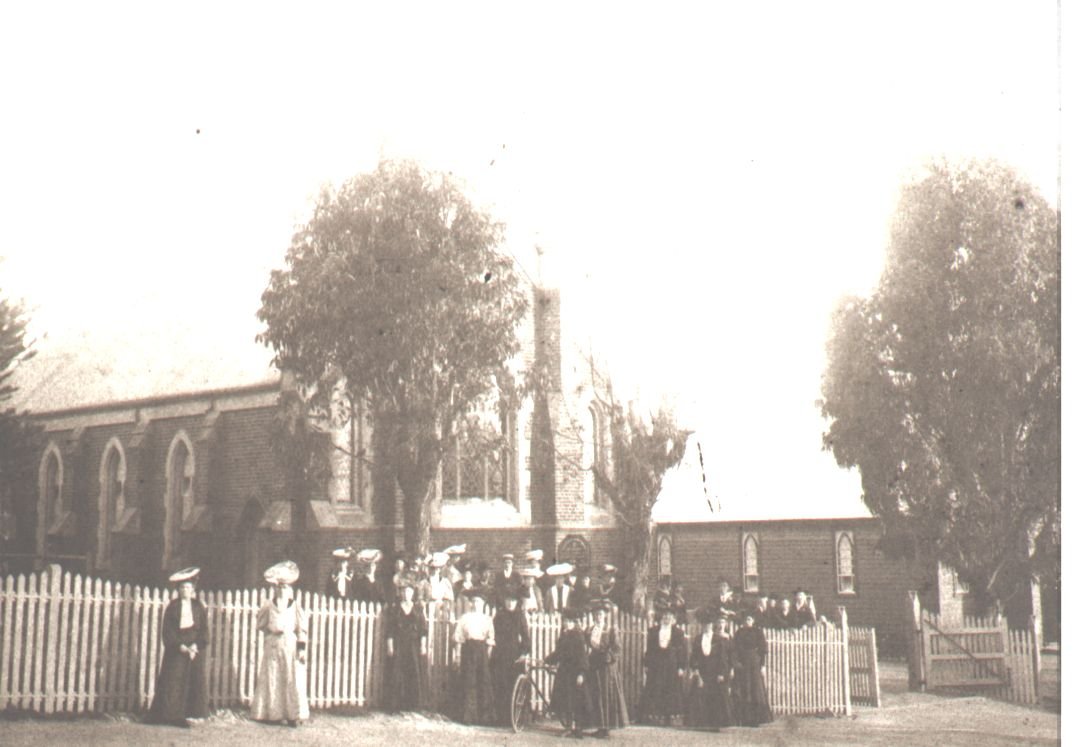
Photo 8 - The Church where the Ebbott family worshiped

The first photo was given to me by a distant cousin who still lives in Chewton, imagine living in the middle of all that history!
Congregation outside the family church date & details unknown
Unfortunately I have no further information or the people but I do know that this is the church where the Ebbott family worshipped.
Today the church is now the Chewton Community  & Senior Citizens Centre the Methodist Church.  The original Sunday school is on the right of the church behind the pine trees.  This photo was taken in 2005.

Chewton Community  & Senior Citizens Centre
Plaque on the front of the  Sunday School Hall/Building


Rear of the old Sunday School Building